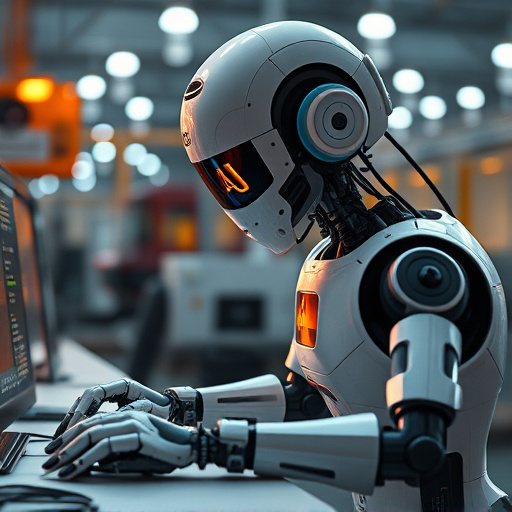



Our exploration of AI Agents has revealed their revolutionary role in industry. We have seen how agentic minds orchestrate robots to perform complex tasks on a large scale.
Today, we shift focus from the factory floor to a far more intimate space. We look to the glow of your personal monitor. We are witnessing the dawn of a new frontier not in warehouses, but within the very heart of our daily digital lives: the personal computer.
This article examines a transformative project that hands the keys of your most important tool, your Windows machine, to an AI Agent. We are no longer just building agents for the world. We are building agents for our world, capable of automating the very fabric of our computer work.
Initializing Your Digital Workspace
Imagine a workday that begins not with your ritual of opening emails and applications. Imagine it begins with an AI Agent that has already prepared your entire digital environment.
Upon receiving your instruction, this agent, supervised by a central orchestrator like the AI Agent Supervisor, logs into the machine. It launches all necessary applications, pre fetches relevant documents, and summarizes your schedule. It operates the computer by intelligently emulating human input, controlling the cursor and executing keystrokes with precision.
This transforms the personal computer from a passive tool awaiting commands into an active partner that sets the stage. Your role fundamentally shifts from a manual operator to a strategic supervisor. The machine is ready for work the moment you are.
The Context Aware Assistant: Operating Within a Persistent Session
The true power lies beyond simple automation. It resides in deep contextual understanding of your workflow. This is where the core principle of maintaining a persistent Session becomes critical.
For a desktop agent, the session is the complete state of your work. It includes open windows, clipboard history, recent actions, and the specific task at hand. The AI Agent Supervisor manages this session, allowing the agent to remember what it was doing and what you need next.
With this persistent context, the agent can perform multi step operations autonomously. It can extract data from a webpage, paste it into a report, format the document, save it to a cloud folder, and then message a colleague with an update. It turns disjointed tasks into seamless, automated workflows managed by an intelligence that learns from every interaction.
From Tool to Collaborator: Redefining the Human Computer Relationship
This evolution will profoundly impact our relationship with personal computers. The PC sheds its identity as a mere tool and becomes a proactive collaborator.
The modern use of a computer shifts from how do I perform this task to what outcome do I need to achieve. The mental load of navigation and process management diminishes significantly. Users interact at a higher level, directing goals and reviewing outcomes, while the AI Agent Supervisor ensures the granular actions are executed accurately.
This promise of efficiency demands a new kind of literacy. Users must learn to manage, trust, and ethically guide an autonomous digital entity. This entity has access to our most sensitive professional and personal digital space. The relationship is built on delegation and verification, not just manual control.
The Guardian at the Gate
The future impact is a paradigm shift. For everyday users, the AI Agent Supervisor will become an indispensable digital steward. It will quietly optimize workflows, prevent errors, and free cognitive space for creativity and strategic thinking. It promises a world of hyper efficient, personalized computing.
But is the public ready? Technologically, we are advancing at a rapid pace. Psychologically and ethically, we face significant hurdles.
Entrusting an AI agent with control over our digital sanctuary requires immense trust. We must trust its security, its judgment, and its alignment with our interests. Concerns about privacy, over reliance, and the loss of foundational skills are valid and critical.
The transition must be gradual and transparent. It must be centered on human oversight. The supervisor role must remain firmly in human hands. The public is cautiously curious, but true readiness will be built through demonstrable reliability, clear user control, and robust ethical frameworks.
The age of the agent driven PC is not simply coming. It is being initialized before us. The question is no longer can it be done. The pressing question is how wisely will we choose to guide it.