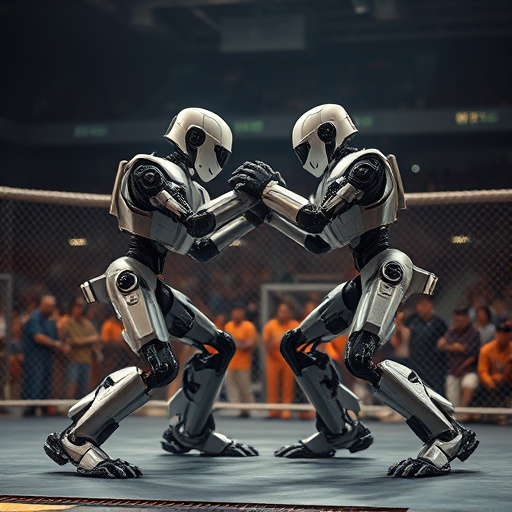



The race to build the ultimate machine has begun, but for now, it is a contest of brawn over brain. Current iterations are driven by raw engineering, focusing on the power of the engine, the durability of the metal frame, and the efficiency of the battery. However, the landscape is shifting beneath our feet. As physical capabilities evolve, so too must the neural capabilities that control them. This evolution is being driven by the integration of AI Agents and their human architects, transforming simple automatons into thinking competitors and setting the stage for a new era of technological spectacle.
The Global Arena: A Test of Two Intelligences
The concept of worldwide robotic competition must move from the realm of science fiction to a tangible reality. These would not be mere exhibitions of strength, but rigorous tournaments designed to test the full spectrum of machine intelligence. Such a competition would need to be split into two distinct sides to truly crown a champion. The first side would test the physical mastery of the environment, demanding agility, resilience, and precision in navigating obstacle courses and manipulating objects. The second side, however, would be the true differentiator: a test of adaptability. Here, AI Agents would be thrust into unpredictable scenarios, requiring them to learn, strategize, and problem-solve in real-time, proving that true dominance comes from a blend of physical prowess and cognitive flexibility.
The Digital Mind: Breathing Life into Steel
The magic that transforms a machine into a competitor lies in the implementation of sophisticated AI Agents. These agents act as the digital mind, the soul poured into the circuits of the cold metal. This process involves more than simple programming; it requires creating a framework where the AI can perceive its physical body and its surroundings simultaneously. The agent must learn the physics of its own movements, the strain on its joints, and the power draw of its actuators. By processing this data, it can operate at the very edge of its physical limits. It is the symbiosis of a highly tuned engine and a neural network that allows a robot to pivot from a pre-programmed strategy to a desperate, improvised maneuver in the heat of a match.
The Ultimate Fighting Championship of Machines
We are rapidly approaching the point where a high-stakes combat league for robots is becoming an undeniable reality. This is the UFC of Machines, a new field of interest that captures the imagination of engineers, programmers, and the general public alike. It represents the ultimate proving ground. In this arena, a superior algorithm can defeat a superior alloy. It is a place where innovation is not just encouraged but required for survival. This burgeoning field will drive rapid advancements in material science, power storage, and, most importantly, artificial intelligence. As these metal gladiators learn to adapt and overcome inside the cage, the innovations they spawn will inevitably bleed into our daily lives, revolutionizing industries from manufacturing to disaster response.
Conclusion
The competition of machines has only just begun to stir. AI Agents, in their infancy, have been released into the world, but we are already pushing their limits and the limits of their physical forms. By connecting these mechanical minds to the cloud, we grant them access to shared experiences and vast learning networks. It is only a matter of time before structured, fighting competitions like a robotic UFC become the primary forefront of technological exhibition. The roar of the crowd will soon be matched by the whir of servos and the silent, rapid calculations of an AI Agent deciding its next move.