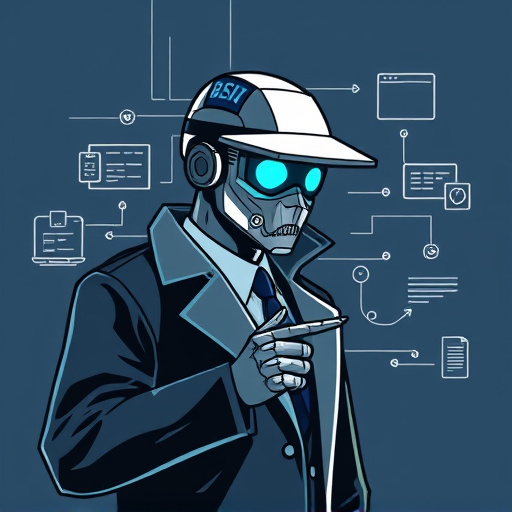




The traditional investigative workflow is often hampered by procedural bottlenecks and human vulnerability. Reports filter through a chain of command, risking delay, alteration, or loss. Victims and witnesses frequently remain silent, deterred by fear of repercussion.
We now stand at the threshold of a transformative evolution: the move from the AI as a tool to the AI Agent Supervision.
An autonomous, secure orchestration of the entire investigative workflow. This system redefines how evidence is handled, analyzed and safeguarded, creating an unprecedented framework for justice.
Procedural vulnerability and data integrity
Behind the door, the current process is fragile. Investigators compile reports and submit them to a human superior. This chain of custody for information is vulnerable, whether through unintentional error or deliberate interference.
The solution is a direct submission protocol. An investigator can forward reports directly into the AI-Agent Supervisor. This creates an immutable, time stamped digital record from the point of origin.
For governmental use, the AI can meticulously log every officer who interacts with or submits material, ensuring all accountability, guaranteeing that no data is erased or lost in transmission, thus preserving the pristine integrity of the evidence trail.
Isolated cases and missed connections
A critical flaw in manual systems is the isolation of cases. A piece of evidence in one investigation might be the key to solving another, but without a unified analytical mind, the connection is lost. Therefore AI-Agent Supervisor shatters these silos as a central processing entity that analyzes all submitted materials across all cases.
It identifies recurring patterns, linked entities, and common modalities that would escape human notice across separate departmental desks.
A new complaint from one person can instantly empower and revive a stalled case being investigated by a completely different team, transforming isolated data points into a cohesive intelligence web.
The factor of the needing: A safety Net
Fear is a primary adversary of justice. Cases are dismissed and victims withdraw because witnesses and vulnerable individuals are afraid of consequences.
The AI-Agent Supervisor addresses this not just through its constant availability, but by creating a confidential security web. It provides a secure channel where information can be submitted with the assurance of protection and anonymity where legally permitted.
This SafetyNet function encourages disclosure from those who would otherwise remain silent, giving detectives access to crucial narratives that were previously unreachable, while offering submitters a shield against direct intimidation.
Conclusion
The evolution to an AI-Agent Supervisor-Detective is not merely an upgrade in efficiency; it is a foundational redesign for trust, connectivity, and safety in investigations.
It solves acute problems: securing data integrity from the source, revealing hidden connections across all cases, and mitigating the fear that stifles truth. By acting as an incorruptible, analytical, and secure central nervous system for justice, this AI model empowers both investigators and the public.
It promises a system where justice is not only persistent and intelligent but also protected and empowering, fundamentally altering the balance between those who seek truth and those who wish to obscure it.