



The world of Mixed Martial Arts (MMA) is a brutal ballet of discipline and skill, where success is forged in the relentless grind of training. Yet, for aspiring fighters and enthusiastic amateurs, accessing consistent, high-quality, and personalized coaching remains a significant hurdle.
Traditional training is constrained by gym availability, costly expert fees, and the inherent risk of injury during sparring. This creates a gap between passionate potential and structured progression, leaving many without the tools to safely and effectively develop their skills.
Isolated Training and Inconsistent Feedback
A fighter’s journey outside the watchful eye of a coach is often one of guesswork. Practicing strikes on a heavy bag offers no feedback on form, power, or accuracy. Without a partner or coach, there is no one to correct a flawed stance or a telegraphed punch.
This leads to the reinforcement of bad habits, plateaus in development, and increased risk of injury when techniques are applied incorrectly. The motivation to train alone can also wane, missing the dynamic responsiveness of a live opponent or an engaged mentor.
A Framework for Solution
This is where intelligent agent technology, specifically architectures like the Microsoft Agent Framework, presents a transformative solution. This framework allows for the creation of sophisticated, AI-driven digital entities that can perceive, reason, and interact.
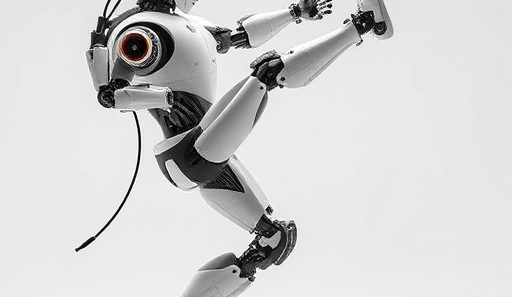
In the context of MMA, it enables the development of interactive training partners, be they immersive holographic opponents or advanced physical robots, that go beyond passive equipment to become active, responsive coaches.
Personalized, Responsive, and Safe
Imagine a training session with an agent-powered system. A holographic opponent adapts its fighting style in real-time, forcing you to work on specific weaknesses. A robotic training dummy measures the exact force and angle of each strike, providing instant data on your power and precision.
Most importantly, an AI coach analyzes your movement through sensors, offering vocal corrective feedback and tailored drill recommendations, turning any space into a personalized, accountable, and safer training environment.
Conclusion
By deploying intelligent agents, the MMA community can democratize high-level coaching and make scientific, responsive training accessible 24/7.
This technological leap bridges the critical gap between isolated practice and expert guidance, fostering better technique, reducing injury, and sustaining athlete motivation. The future of fight training isn’t just in the gym; it’s in a dynamic, digital corner, powered by intelligent code.