




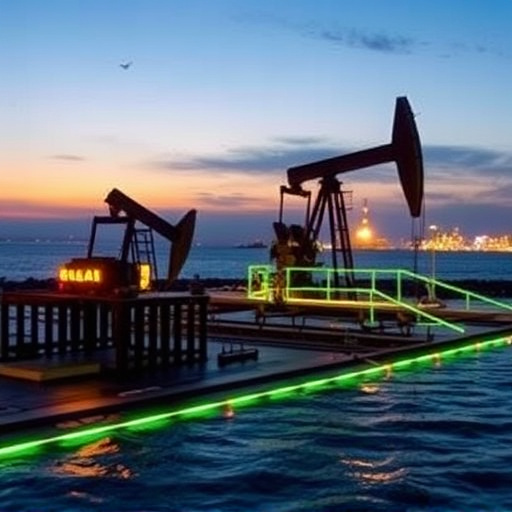
For decades, the Supervisory Control and Data Acquisition (SCADA) system has served as the operational backbone of the oil and gas industry, providing unwavering surveillance from the wellhead to the refinery.
It is the central system monitoring remote extraction, pipeline pressures, and complex refining processes. Operators depend on its real-time data and configured alarms to safeguard infrastructure and maintain flow.
Today, a new intelligence enters the control center: the AI Agent. Built on advanced frameworks, these agents are not a replacement for the proven SCADA foundation but a transformative cognitive layer. They analyze multidimensional data, predict system states, and provide prescriptive insights, elevating decision-making from reactive oversight to proactive optimization.
Upstream: From Reactive Shutdowns to Predictive Reservoir Management
In upstream production, the core challenge is balancing maximum extraction with long-term reservoir health and equipment integrity. Traditional SCADA systems vigilantly monitor wellhead pressure and flow rates, configured to trigger alarms or shutdowns when parameters breach static setpoints.
This reactive approach, while protective, can lead to significant production loss from unnecessary stoppages and fails to optimize for the dynamic subsurface environment. An integrated AI Agent transforms this operation. By synthesizing SCADA data with geological reports, historical decline curves, and real-time equipment vibration analysis, the agent can forecast issues like sand ingress or pump failure before they escalate.
It shifts the paradigm from simple alarm-based shutdowns to predictive maintenance and optimized extraction, recommending precise choke valve adjustments to stabilize flow and schedule interventions during planned downtimes, thereby maximizing asset longevity and yield.
Midstream: From Basic Leak Detection to Intelligent Pipeline Assurance
The midstream transportation network faces the relentless challenge of ensuring the safe and efficient flow of hydrocarbons across vast distances. Pipeline SCADA reliably tracks pressure, flow rate, and temperature, employing basic computational methods like volume balance to flag potential leaks.
This method, however, is often slow and prone to false alarms triggered by normal operational transients like batch changes or slack line flow, leaving operators to discern real threats. The AI Agent acts as a force multiplier for pipeline integrity. It continuously runs a dynamic, real-time hydraulic model of the entire network, learning its unique operational “fingerprint.”
By correlating SCADA sensor data with weather patterns, ground temperature, and scheduled operations, the agent can identify subtle, anomalous signatures indicative of a developing leak with superior speed and accuracy. It provides operators with prioritized, actionable alerts, pinpointing likely locations and assessing probabilities, transforming pipeline monitoring from a generalized alarm system into a precise diagnostic and prognostic safeguard.
Downstream: From Static Control to Adaptive Refining Optimization
Downstream refining involves managing highly complex, interdependent processes where margins are won through precision. SCADA systems expertly control individual units and monitor storage tank levels, but typically operate within predefined, rigid setpoints for product blending and process parameters.
This approach cannot dynamically adapt to fluctuating crude feedstock quality, shifting product demand schedules, or real-time energy cost variations, leaving economic and efficiency gains unrealized. Here, the AI Agent serves as a continuous optimization engine. It analyzes a holistic data stream including crude assay data, real-time analyzer results for product specifications, market demands, and energy pricing.
The agent can then provide prescriptive recommendations to adjust reactor temperatures, column pressures, and blending recipes in real-time. This ensures the highest-value product slate is achieved with minimal energy intensity, moving refinery control from a series of static loops to an adaptive, profit-maximizing system.
Conclusion
The future of oil and gas operations is undeniably collaborative, pairing the deterministic reliability of SCADA with the cognitive power of AI. This synergy does not displace the critical role of human expertise or time-tested control systems but fundamentally augments them.
By transitioning from reactive monitoring to predictive and prescriptive operations across the value chain, this partnership fosters a new era of resilience, safety, and economic efficiency. As the industry pushes into ever more remote and challenging environments, these AI Agent modules will become indispensable, providing intelligent, standalone oversight for unmanned platforms and isolated infrastructure, ensuring the safe and optimal stewardship of vital global energy resources.